Energy
What is LED?
- Light-emitting-Diodes (LED) is a solid state lamp that uses led's.
- LEDs are semiconductor chips using Gallium Arscinde, Gallium Phosphate or Gallium Arsenide Phosphate.
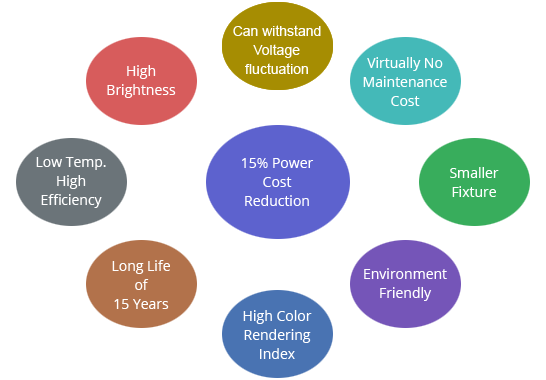
- LEDs lighting has a life of 50,000 hours and can go upto 100,000 burning hours.
- LEDs are a revolutionary next generation energy saving lighting which can save up to 90% energy compared to GLS bulbs and more than 50 % compared to Fluorescent tube lights.
LED saves the planet
According to US DOE, an LED replacement for the approximately 425 million 60-watt incandescent bulbs sold each year could save 34 terawatt-hours of electricity in one year, enough to power the lights of 17.4 million US households, and could avoid 5.6 million metric tons of carbon emissions annually.
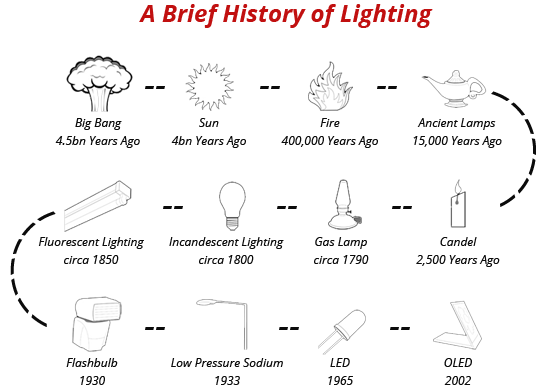
History of Lighting
- 1879 The birth of light with Thomas Edison the first Incandescent lamp.
- 1932 the first SOX lamp being introduced by Philips.
- 1934 First Mercury vapor lamp being invented introduced by Philips.
- 1938 First Fluorescent lamp being invented Philips plays a major role in this revolution in Lighting.
- 1961 Invention of LED lighting.
- 1980 Philips introduces the first SL* lamp making way for miniaturization in lighting through fluorescent lamp.
- 1991 the first Electrode-less fluorescent lamp having a life up to 60,000 burning hours being introduced.